The Stories We Almost Lost — And How to Save Them
Every family holds memories that exist nowhere but in someone's mind. Here's why capturing them matters more than you think.
There is a particular kind of grief that doesn't get talked about enough — the grief of the story you never heard. The one your grandmother almost told you at the kitchen table before someone changed the subject. The one your father kept meaning to write down. The one that lived only in one person's memory, and then quietly disappeared when they did.
We tend to think of memory as something passive, something that simply exists. But memory, especially the kind worth keeping, is actually fragile. It needs tending. It needs to be spoken aloud, written down, shared with someone who will carry it forward. Without that care, even the most vivid, meaningful stories can fade within a generation — sometimes within a decade.
This is what Memory Monday is really about. Not just honoring the people we've lost, but taking seriously the work of preservation. Because honoring someone isn't only about flowers on a grave or a candle lit on an anniversary. It's about keeping the texture of who they were alive — the way they laughed, the hard choices they made, the small moments that shaped them into the person you loved.
Think about what you actually know about the people in your family tree. You might know names and dates. You might have a photograph or two. But do you know what your great-grandmother feared? What made your grandfather feel proud? What your aunt dreamed about before life took a different turn? These are the details that make a person real, and they are almost always the first things to disappear.
The good news is that it is never too late to start gathering them — and it is almost never too early, either. If you still have people in your life who hold these stories, this week is a good week to sit with them. Not with a formal interview or a list of questions, but with genuine curiosity and a willingness to listen without rushing. Ask about a photograph. Ask about a place they loved. Ask what they wish they had known at twenty. You will be surprised what comes forward when someone feels truly heard.
And for those of us who are already grieving — who have already lost the people we wish we'd asked — there is still so much that can be recovered. Letters, old cards, voicemails you haven't deleted, the stories that other family members carry. Memory is rarely held by just one person. Often it is scattered across the people who loved the same someone, and the act of gathering it together becomes its own kind of tribute.
At VirtObits, we believe that a memorial is not just a marker. It is a living document of a life. When you write about someone — really write about them, with honesty and love and the specific details that made them who they were — you give future generations something extraordinary. You give them a person, not just a name. You give them a relationship with someone they may never have met, but who shaped the family they belong to.
This matters beyond sentiment. Children who grow up knowing the stories of those who came before them have a stronger sense of identity and resilience. They understand that they are part of something larger than themselves. They inherit not just genes and last names, but values, hard-won wisdom, and the quiet reassurance that others before them have faced difficulty and found their way through.
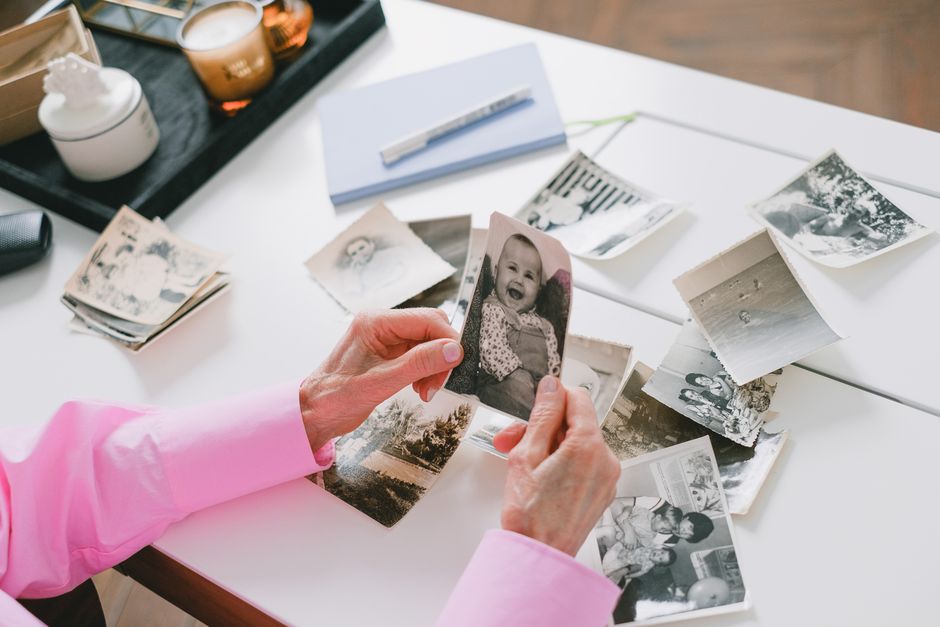
So today, on this Memory Monday, we want to gently encourage you to do one small thing. Write down a memory. Record a voice note. Upload a photograph with a caption that explains what was actually happening in it — not just the year and the place, but the feeling of that day. Light a candle and then tell someone nearby why that person deserved to be remembered. These acts don't have to be grand. They just have to be intentional.
The people we love deserve to be more than a date on a document. They deserve to be known — their humor and their struggles, their kindness and their complexity, the way they made the people around them feel. That knowing is what we are here to help you preserve.
Memory, it turns out, is not just something we hold. It is something we pass on — and every story you choose to save today is a gift to someone who hasn't been born yet.